A buyer can close on a Brockton two-family on a Tuesday, hand over a cashier's check, get the keys, and still not be able to legally put a tenant in the vacant unit that same week. That gap surprises almost every out-of-state or first-time investor who treats a Massachusetts multifamily closing the way they'd treat a single-family one. The building changes hands on the closing date. The right to occupy a vacant unit changes on a different date entirely, one set by the city's Public Health Division, not by the title company.
That gap is the single most useful thing to understand before you write an offer on a Brockton triple-decker or two-family, and it rarely shows up in the listing, the comps, or the median price headline. So before getting into what the market is doing, it's worth getting clear on what actually gates a rent check.
The median price is answering the wrong question
Ask three different sources what a home costs in Brockton right now and you'll get three different answers, and the gap isn't noise. It's a function of what each source is actually measuring.
Closed sales tracked over a single month put the median sale price at $475,000 in March 2026, down slightly from a year earlier. A six-month trailing window through early September 2026, covering 377 closings, puts the median at $525,000, with the middle half of those sales landing between $445,000 and $660,000. A snapshot of active listings in May 2026 put the median asking price at $499,900.
None of these numbers is wrong. They're measuring different things: one month versus six, closed price versus list price, a narrow window versus a wide one. For a buyer comparing a specific triple-decker to "the median," the useful fact isn't which number is correct. It's that the $445,000 to $660,000 middle-half band from the six-month data is unusually narrow for Massachusetts, ranking among the tightest quartile spreads of the forty Massachusetts markets tracked in that dataset. A narrow spread means a specific property's price is easier to sanity-check against comparable sales than in a market where the middle half swings wildly. That's a genuinely useful fact for underwriting. The single headline median is not.
| Source and window | Figure | What it measures |
|---|---|---|
| Single month, March 2026 | $475,000 | Median closed sale price |
| Six months trailing, through early Sept. 2026 | $525,000 | Median closed sale price, 377 closings |
| Snapshot, May 2026 | $499,900 | Median active list price |
If you're pricing an offer off a single cited median without asking what window and what data type it reflects, you're comparing your deal to a number that may not describe your deal at all.
The paperwork gate nobody puts in the listing
Here's the mechanism that actually decides how fast a Brockton multifamily starts producing income after closing.
Brockton's city ordinance, under Article II of Chapter 4, requires every rental unit to be registered annually with the Public Health Division by July 1, with a modest fee for initial registration and renewal. Owner-occupied buildings with two units or fewer are exempt from the fee but not from the registration requirement itself. That's the baseline paperwork, and it's easy to overlook if you're used to markets that don't require it at all.
The bigger issue is Section 4-22. A Certificate of Fitness is required before any vacated unit can be reoccupied, and again at least every three years regardless of turnover. If the seller emptied a unit before listing, whether to make showings easier or because a tenant simply moved out, that unit legally cannot be re-rented until the city issues a new certificate. And the ordinance is specific about one detail that trips people up: outstanding fines or unpaid bills on the property will block issuance of the certificate. If the previous owner left an unresolved violation or unpaid fee on record, that liability doesn't disappear at closing. It can sit there blocking your first month of rent until it's cleared.
Layer on top of that Section 4-23, which requires the unit to be inspected by the Public Health Division or an authorized inspector every three years, with per-unit fees. None of this happens automatically at closing. It's the buyer's responsibility to find out where each unit stands before making an offer, not after.
The practical move is simple: before you write an offer on a Brockton two- or three-family, ask the listing agent directly whether any unit is currently vacant, how long it's been vacant, and whether a Certificate of Fitness is on file with the city for that unit. If the answer is vague, treat the timeline to first rent as longer than the closing calendar suggests, and price that delay into your offer.
Why the building stock makes this non-negotiable
This isn't a quirky local rule that rarely comes up. It comes up constantly because of what Brockton's housing stock actually is.
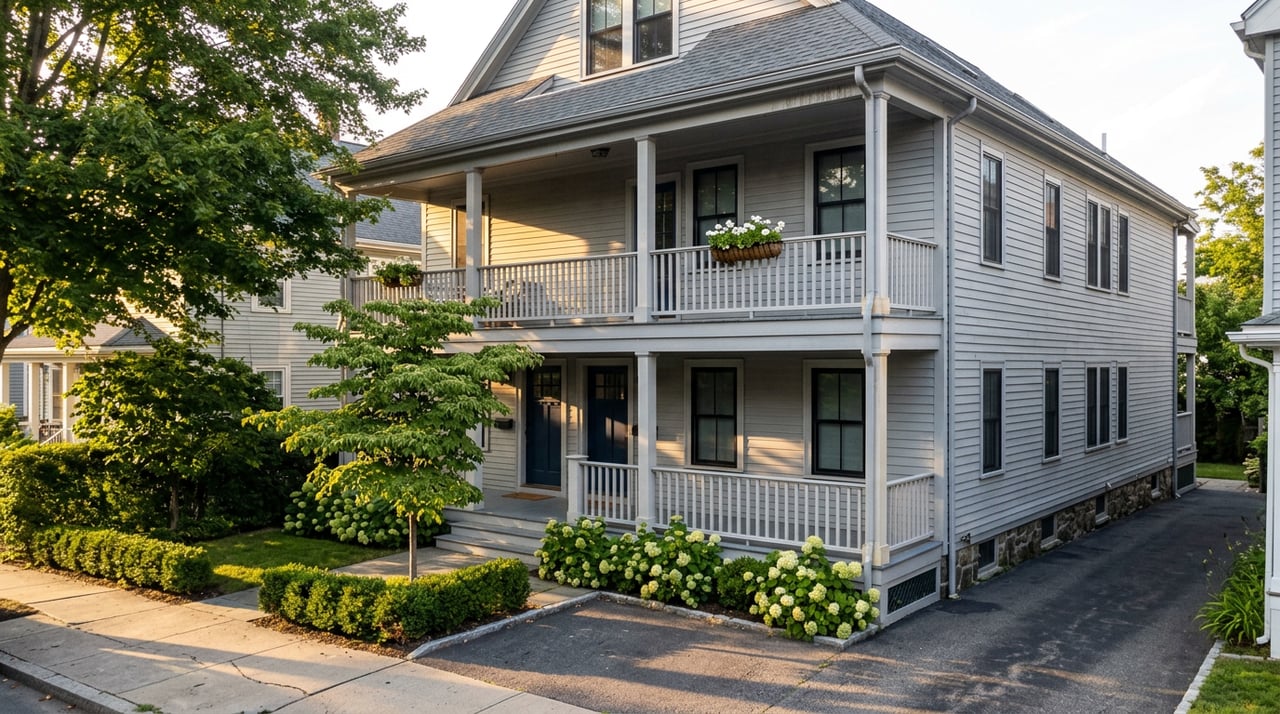
The typical unit in the city was built around 1959, and a meaningful share, roughly a third, dates to 1939 or earlier. That's not a coincidence. Brockton's multifamily housing is dominated by triple-deckers and two-family homes built in an earlier construction era, the kind of stock that Massachusetts' lead paint law was written to address. That law applies to residential property built before 1978, and it carries disclosure duties for sellers and landlords along with hazard removal or covering requirements wherever a child under six will live in the unit.
Put those two facts together and the Certificate of Fitness requirement stops looking like red tape and starts looking like a reasonable response to an old housing stock with real habitability variance from one building to the next. If you're underwriting a pre-1978 property with any plan to rent to a family with young children, lead compliance belongs in your initial budget, not as a surprise line item after an inspector flags it.
The tax bill sellers don't always explain
One more number gets misread constantly: the tax rate that actually applies to a small multifamily building.
Brockton's residential tax rate for fiscal year 2026 is $12.11 per $1,000 of assessed value. The commercial, industrial, and personal property rate is roughly double that, at $24.20. Because two-family, three-family, and small apartment buildings are classified as residential property under the city's tax code, they're billed at the lower rate, generating example annual bills of around $7,353 for an average two-family and $8,251 for an average three-family. If a building has a first-floor storefront or any commercial use mixed in, that portion should be modeled separately at the commercial rate rather than folded into the residential estimate. Getting that distinction wrong in a spreadsheet is one of the easier mistakes to make when comparing Brockton to a market with a single flat tax rate.
This isn't a marginal property type in the city. The tax rolls list more than two thousand two-family parcels and over fifteen hundred three-family parcels citywide, alongside several hundred small apartment parcels. Small multifamily isn't a niche corner of the Brockton market. It's a core part of the tax base and the housing stock, which is exactly why the city built a dedicated registration and inspection system around it instead of treating it as an afterthought.
What this means before you make an offer
Before submitting an offer on a Brockton multifamily, it's worth confirming four things directly with the listing side rather than assuming them from the MLS sheet:
- Whether any unit is currently vacant, and for how long
- Whether a Certificate of Fitness is currently on file with the Public Health Division for each unit
- Whether the property has any outstanding fines or unpaid municipal bills that could block a future certificate
- Whether the assessed tax classification matches the actual unit count and use, especially if there's any commercial space involved
None of these questions show up on a standard price sheet. All four affect how fast the property starts producing income and what your real carrying costs look like in the first few months of ownership.
Frequently asked questions
Does selling the property automatically trigger a new Certificate of Fitness? Not by itself. The requirement is tied to vacancy and reoccupancy, and to the standing three-year inspection cycle, not to a change in ownership on its own. But if a unit was vacated before or during the sale, a new certificate is required before that unit can be reoccupied, regardless of who owns the building.
Are owner-occupied two-family homes exempt from these rules? Owner-occupied buildings with two units or fewer are exempt from the registration fee, but the registration itself is still required under the ordinance.
Does the lower residential tax rate apply to a triple-decker with a ground-floor business? The residential portion of the building is billed at the residential rate. Any commercial or mixed-use component should be assessed and modeled separately at the higher commercial rate rather than assumed to fall under the residential figure.
If you're looking at a two-family or three-family in Brockton and want a second set of eyes on the timeline before you write an offer, Christina Martinez can walk through the specific building with you. Let's Connect.